- Issue #16
- Kit Steitz :: “Building a butterfly garden with you” and “Queer, as in”
Building a butterfly garden with you
I want to steal armfuls of chicory, speckled with parasols of Queen Ann’s lace from the roadside with you, but we should wait until night// Be crimes, do gay you say. Crimes of beauty. Gay as in don’t forget to kiss me before you leave for work// I say It’s a toll, a tax, it’s necessary// throw the shovel in the trunk. Lay down some plastic so we don’t get soil in the Camry’s upholstery. Let’s move these living bodies. Let’s dig in the dirt under the shifting shadows of a new moon. Let’s steal our own monarch sky.
Queer, as in
the mountain sunrise seeping through the coyote fence at the foot of the snow wrapped & sparkling Jemez mountains// holding hands at Ghost Ranch, thinking about brush stroke flowers & dead queers in love in the desert// smoking weed with your mother under endless, cold stars, our breath corporeal in the night air.
the golden hour in September, which is really like 15 minutes, on the back deck of our house (a very very very fine house) with our dogs (two very very very fine dogs) just sitting in peace as the slatted sun melts into the pots of basil and lavender and mint, until the she finally blushes and flees.
an old growth forest, creaking oaks and in August, thick with ticks// in August, your sweaty palm pressed against mine as we hike this dry creek// that fall, a friend processed the acorns for butter.
sprouting seeds in the 2×4 raised garden bed frame you built in the garage: the broccoli, the curling tendrils of squash, the astringent sticky stems of cherry tomatoes we planted in our first together garden. You said you never liked maters before ours.
a flooded creek rushing the autumn bridge over Dripping Springs, where we dangled our naked toes and missed Pam together// Or Lick Creek Lake, where we waded in, together, and you pointed out that stout green heron relishing the mud bank. I didn’t even know about green herons until you.
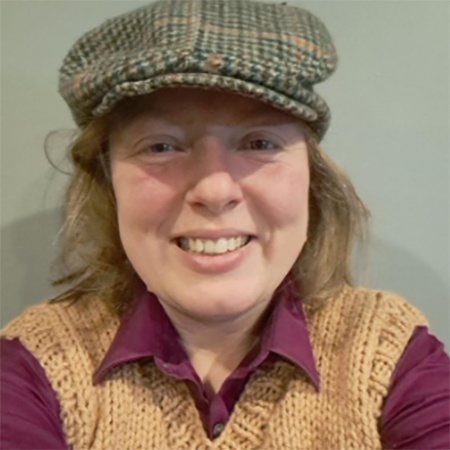
Kit Steitz is a disabled, queer, non-binary poet, and the founder of Pink Poetry Club on Bluesky, or they could be a pothos named Pathos, there’s really no way to tell. They enjoy writing poems while fending off slobbering, overgrown puppies and geriatric cats. Their work has appeared in Moist Poetry Journal, the lickity~split, ALOCASIA, like a field, Roi Fainéant Press, and others. You can find their neurospicy-fueled ramblings at @kitikins.bsky.social.
- Sreeja Naskar :: “i unsaint myself in front of the mirror,” “after they left, the garden wouldn’t bloom / but the weeds did,” and “she left in autumn and everything i’ve planted since has grown teeth”
i unsaint myself in front of the mirror
i stopped praying when i realized god was just another man who never looked me in the eye / i started growing basil in my mouth instead / kissed a girl who tasted like wet soil and unfinished apology / we lay under the fig tree and named our bruises after saints we didn’t believe in / thomas on my thigh / cecilia on her clavicle / we did not ask for redemption / we asked for rot / holy decay / the kind of softness that comes after a storm shreds your spine open / she told me she saw a version of heaven where no one flinched at the word wife / where queer bodies bloomed without being asked to explain / i told her i saw god once / in the mouth of a dying bird / all blood and apology / neither of us were saved / we drank tap water thinking it was sacred and broke bread with our bare hands and named it communion / i no longer believe in salvation / just this body / this heat / this ache that spells itself out in moss / in the vines growing from my ribs / i worship in lowercase now / my rituals are all dirty / all alive / all mine.
after they left, the garden wouldn’t bloom / but the weeds did
they said they’d come back / that they just needed time / like a seed needs darkness / like soil needs to forget the shape of a shovel / i waited with my hands in the dirt / bruised fingernails and a mouth full of rosemary prayers / but the lavender turned on me / went brittle overnight / the basil yellowed at the roots / and the cactus—god, the cactus bloomed / one red flower, a wound announcing itself / and i cried because it was the wrong kind of beautiful / they had kissed me here, by the pots / lips tasting like mint tea and unfinished apologies / they said i made them feel soft / like moss / a forgotten language their body remembered / they said it like a sin / i let them plant me / water me / name every inch of me like a gardener naming his dead / then they left / said the sun was too much / the soil was wrong / that i’m not ready to be this seen / i buried their toothbrush under the aloe / every morning the garden reminds me / of the places their hands touched / the spinach refuses to grow where their mouth once was / the marigolds bloom and bloom and bloom / like they don’t know they’re grieving / i eat leaves now / i press them to my skin like scripture / try to root something new inside the hollow / but the tragedy of queer love is / sometimes the ones who understand you best / are the first to leave / and the last to rot.
she left in autumn and everything i’ve planted since has grown teeth
the tomatoes refuse to ripen without her breath in the kitchen / the mint turned bitter the day her toothbrush dried / i told myself i could grow past her / that i could bury the memory like compost / something holy in decay / but every time i dig a hole for something new / i hit the bones of what she left / her hair still wrapped in the roots / her laughter caught in the wind-chime parsley / she kissed me with lips that were thyme and absence / said she loved me like wild things love fire / desperate / doomed / i kept her letters in the freezer, thought cold might preserve goodbye better than heat / the rosemary grew sideways after she left, crooked toward the emptiness / i pruned it and bled / i bled into the soil until the basil grew red-veined / everything in this garden knows her / the vines curl like her wrists / the sunflowers tilt like her head when she lied / i water them anyway / i tell them nothing is wrong / but they bloom too fast / then wilt too soon / like they’re reenacting the part where she said forever and meant tuesday / grief has a scent / it’s damp earth and sour lavender / it’s a hand pulling the roots before the flower opens / it’s the way i still plant things i know won’t live / just to feel something die in my hands that isn’t her.
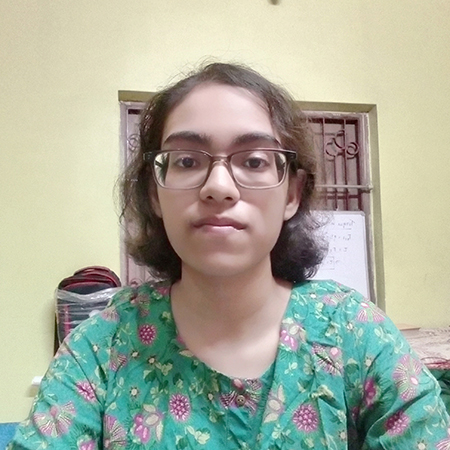
Sreeja Naskar is a young poet based in India. Her work has appeared in Poems India, Crowstep Journal, ONE ART, Ink Sweat and Tears, FRiGG, The Chakkar, Trace Fossils Review, and elsewhere. When she isn’t writing, she’s watching sad films, talking to her houseplants, or overanalyzing Bon Iver lyrics.
- Sarp Sozdinler :: “Shape of Things Left Unpromised” and “Wetlands”
Shape of Things Left Unpromised
Nearing the end of summer,
the olives bud plump and green
on the trees farther afield.
It takes a second to picture myself
standing on the edge of the valley
—the way an explorer might scan
a virgin land. Come night, I become
a tree rooted in the world, a root that
knows the nooks and crannies of
this soil like the back of its hand.
Some days I meander along the
rivers for hours, root for lost souls
of the desert. Some days I merge with
the sea, only to pour out into the ocean.
I lend an ear to the sea creatures, and
they are ghostly, ethereal. Yet another
universe in which the mammals suffer,
pretending to be unborn under a bank
of moss-covered rocks. A universe
that devours its newborns, bury them
in the sand. A universe that has no
responsibilities, just some flesh and bones.
Olives and vines and trees.
And the world talks back when it feels
like. You are no one, it says, nothing to
take seed in this world. You have no
home, no friends. Nowhere to take your
business elsewhere. Where you can be
someone else. And just like that, I’m
denied passage into the underworld,
left with nothing but wine and olives
and handfuls of earth to savor. I become
the earth, dissolving back into pebbles and
dirt. I become the leaves, branching myself
into olive pits. Willing myself back to being,
giving birth to myself. But the world remains
indifferent, spinning at ease in its arrogant
majesty. The planet is the partner I know I’ll
never have, the one permanent body I’ll never
be able to touch. I’ll take the shape of things
left unpromised—a mouth to bite into the olive;
the sun to bathe myself in. I know it’s all
possible. Probable. A world in which I’m new.
My olives, too. All the world’s children.
Whispering to me in riddles, swaying along
my branches like on a swing.Wetlands
we never kissed in the city
only in cattail wind
in the hush of fog-heavy reeds
where no one asked who’s who
you called the frogs our choir
your fingers learning
what dusk does to skin
mud claimed our soles
like a second inheritance
we let it
your nail beds
smelled of algae & me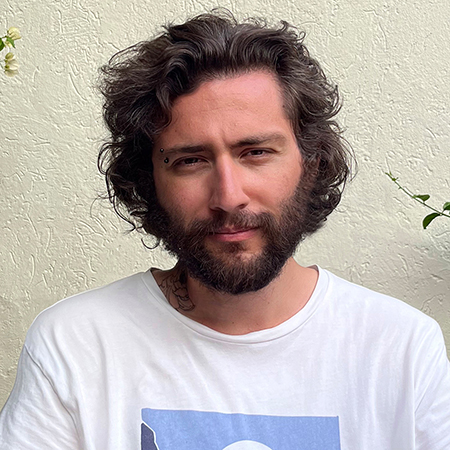
Sarp Sozdinler has been published in Electric Literature, Kenyon Review, Masters Review, Trampset, JMWW, and Normal School, among other journals. Their work has been selected or nominated for anthologies including the Pushcart Prize, Best Small Fictions, and Wigleaf Top 50. They are currently working on their first novel in Philadelphia and Amsterdam.
- Elizabeth Hart Bergstrom :: “For the Chronically Ill”
Maybe you were meant to be a maguey,
an agave that takes thirty years to bloom in desert grasslands.
Your heart is intoxicating,
your sweetness distilled into mezcal.
Maybe you were meant to be a traveler’s palm tree
on the island of Madagascar
that waits to be pollinated by ruffed lemurs.
Your nectar slakes the animals’ thirst
and their muzzles shine with gold pollen.
Maybe you were meant to be a corpse flower,
lying dormant for ten years
and smelling awful when you finally wake,
but still, crowds of people come from miles away
to marvel at you.
You unfurl a ruffled spathe in the colors of
blood clot, black mission fig, deep purple bruise.
You radiate your own heat.
Seeking out the wind, water, and sun you need,
you will grow in your own way.
You don’t need anyone’s permission
to sleep for a decade
and only blossom for one day.
There are only the movements of celestial and earthly bodies—
there are no clocks that matter.
Elizabeth Hart Bergstrom is a queer, chronically ill writer whose work appears or is forthcoming in Bennington Review, Michigan Quarterly Review, New Orleans Review, Passages North, Uncanny, and elsewhere. They were born in the foothills of the Blue Ridge Mountains of Virginia, on Monacan land.
- Laura Mota-Juang :: “the one watermelon garden”
this is the first time I am an adult
and this is the first time that as an adult
I have a garden.
I sown my watermelon knowing
that its seed would prefer
another weather and unpotted soil.
maybe it would prefer not to be on a balcony.
in any case, we never choose
the ground we are born into.
I kept a diary for its growth,
but counting the days wasn’t enough.
I dug the dirt to see the stage of germination.
my grandma apprehended me
but trusting her is hard ever since
she transformed my spinach garden
into a bowl of soggy green.
I was nine and feeling like
someone I love could steal from me.
my watermelon is a sugar baby,
I give all that it asks through its leaves.
when the time comes, I am the pollinator.
flower without belly touching flower with belly
each pollen to become a seed.
the belly becomes a melon
silly, growing heavier
the size of a ping pong ball,
a fist, a balloon.
I give it a hammock.
my parenting style is apologizing
for inappropriate conditions with gifts.
I come to it often,
garden breaks instead of cigarettes.
I watch for bugs and signs of communication.
there are many things I cannot tell
from its hardy green.
but I learn to watch what grows and dries
while I wait for the time of sweetness.
the moment I’ll see if we made it.
for now there’s a spider on
the left lower side of the watermelon plant.
I look into the eight eyes and thank her
for being the darling who eats aphids.
If I am not the only one
guarding and feasting
I think we might have a chance.
Laura Mota-Juang is a Taiwanese-Brazilian shameless experimentalist from São Paulo and based in Tiohtiá:ke/Montreal. She is the author of Light Spill (Block Party Press, 2023), a chapbook inspired by Physics’ imagination. Interested in collaborative poetics, Laura has co-authored the chapbook to say what we see (2025) with Sophia Cirgnano, and friend/shapes friend/scapes (2024) with Hannah Polinski. Laura was a finalist of the QWF’s carte blanche Prize 2023. She is currently painting playful creatures on thrifted garments at No Fiction Projects.
- Emdash :: “Corpse Flower POV (Titan Arum)”
Location: The Huntington Library, Art Museum, and Botanical Gardens
Humans gotta lot to say about me.
Say my aroma is “rotting flesh”
complain I “only” bloom
48 hours max. The disrespect!Splendorous me
belly rich burgundy,
petals flare jade
green gradient key
lime to Elphaba emerald.
I am the largest unbranched
inflorescence among plants
rainforest royalty.
Yet I’m met by rude
alyssum, selifes
upturned noses
called finicky,
gross & engross.A little harsh, no?
I know I mell better than
fresh waffle cones
pink plumerias,
milk buns, sesame oil,
nuts4nuts street carts,
outdoing every overrated rose
that ever was. For sure
superior to summertime
homosapien funk.
Or that “fresh linen”
yankee candle sitting by
those mildewy IKEA towels.Indonesian limestone hills
are my hometown.
In The Sumatra Forest
remains under 1,000
of my fragrant kind.
Hubristic humans
logged, reduced our home
into nasty oil palm farms
profiting off our burial groundI live inside this manicured garden
reliant on carbon footprints for water
where tourists presume
I don’t understand their yap
but I am a polyglot,
living liminal, cantik.
People flock to view me
international masterpiece.So hold your pity.
I stay magnanimous,
moored, mystique,
magnifique, mariposa.I take my time blooming.
Colossal 15 feet
leaves yawn, glancing
down at you & your aglow
bricks—you could never.
Emdash AKA Emily Lu Gao (高璐璐) is a poet, artist, and daughter of Chinese immigrants. She writes to heal, grow, and decolonize. Until January 2026, her poem installation “Letter B” is on view at The Chinese American Museum of Los Angeles as part of the (Be)Spoken Poetry exhibit. She believes in poetry’s power to buoy humanity and build community. For two years she produced, hosted, and curated The Word Bookstore Open Mic in Jersey City, NJ. (For publication and performance history: emdashsays.com.) They’ve received funding from Sundress Publications, Bread Loaf Environmental Writers Conference, Jersey City Arts Council and more. She has an BA in Asian American Studies from Pitzer College and a MFA in Creative Writing from Rutgers University-Newark. They are Missouri-born, California-raised and based in anxiety. Free Palestine.
- Saheed Sunday :: “In These Ancestral Rites, We Remember our Forefathers through Strong Morsels”
We know what the night is thinking. These noises of pestles
hitting mortars are loud enough to echo home. To echo all
the memories we never learnt to force down with strong
morsels of pounded yam. Mom says white is heaven.
And we have stored up enough of them in our belly
like archangels. Mom says white is divine. And we have
gulped down enough of it to make us gods. Father says
white is history. And we can see those pasts. Through
the feverish faces of the lumps of yams scattered
in our mortars like pebbles. Here, we have learnt
to never pick food that finds its way to the ground.
There are no coincidences with nature. That is the earth
working its ways to fix crumbs into the bellies of our
forefathers. Spirits whispering like good news into the ears
Of the land. Saying, here it is: here is your own portion
of these strong morsels. We tap wine like little graces into
our kegs and drink ourselves to stupor. But plantation
is trembling down its feet, and we are the fear. Its neck
droops down like a question mark, and we are the sickle.
If growth were to be a dairy product, some of us would be
lactose intolerant. We bend through harvests like acrobats
and wonder why we still fall short of belly-filled palms.
Drained feet. Hungry stomachs. How do we remember
our forefathers now if we keeping losing our strong morsels
to feeble attempts at preservation?
Saheed Sunday, NGP V, is a Nigerian poet, a Star Prize awardee, a 3xPushcart prize nominee, a Best of the Net prize nominee, Best Small Fictions prize nominee, an HCAF member, and a poetry reader at Chestnut Review. He won the Poetry Archive Now Contest, Centrestage competition, Lagos Poem Project, Quramo Poetry Prize, ZODML Poetry Prize and was a runner-up for The Nigeria Prize for Teen Authors. He was also shortlisted for the Rachel Wetzsteon Chapbook Award, Wingless Dreamer Poetry Prize, and The Breakbread Literacy Project. He has his works in Palette Poetry, Lucent Dreaming, Lolwe, Strange Horizons, Trampset, North Dakota Quarterly, The Deadlands, Shrapnel Magazine, Rough Cut Press, The Temz Review, Brittle Paper, Poetry Column, Off Topic Publishing, Eunoia Review, and elsewhere. In 2018, he was shortlisted for the Wole Soyinka International Cultural Exchange. He can be reached on Twitter @saheedtsunday, or Instagram @_saheedsunday.
- Marcy Rae Henry :: “Los saguaros are being destroyed” and “You can’t really drink out of a cactus”
Los saguaros are being destroyed
The sun is needed and also dangerous
Beneath it people hide things for others
en la sombra de saguarosWater in containers painted black
to absorb not reflect sun
Sunscreen Sombreros
Clothes Crude mapsImagine the sun betraying your whereabouts
Not using a phone for fear
of becoming a little black
dot crossing a line
. . . . . . . . . . . . . . . . . . . .
Oh sí, your location is being commodified
Along with cages and the cages around themA virus travels like the rich
Saguaros can die of frost
spreading over expandable skin and fruit red as royaltyWooden ribs can hold two hundred gallons of rain
Si se dejan al sol y la lluvia saguaros can live two centuries
As long as this country has been
Longer than this f r o n t e r a has beenTo kill or steal a saguaro is a felony
Cactus cops normalmente roam the border
now stand by while saguaros are removed
to make room for a wall whose removal
will be reminiscent of BerlinDespués de cien años a saguaro starts to grow its first arm
lifting it into the sky as if to say
Dame tus cansados tus pobres your huddled masses
yearning to breathe libres Envíame los desposeidos
I lift my lámpara beside the sun-colored doorYou can’t really drink out of a cactus
Even though Hollywood says nothing holds fresh water
like the plant that protects itselfMis tíos drank beer out of cans
and asked us to bring them one after anotherWe were like the ‘h’ en español
Silent A placeholderSome of us swore we’d never grow up and marry tipos así
Some of us swore no casarnos
to be rara like the ~ or el ʹ in text messagesWould Hollywood have us laughing as we flashed forward
to my prima’s husband snapping móle-covered fingers at her
demanding: traeme otra tortillaWould it show her telling him: get on up—y traeme una chela
with música swelling in the backgroundMaybe it would show my familia looking at her
as if she slapped him
as if she tried to drink water out of a cactusLos del desierto know that unless it’s a special barrel cactus
the green goo inside sickens you
maybe even dehydrates you to deathHollywood knows that insulting your marido
might get you una cachetadaY no hay laugh-track at the border
You’re not always sola
But you’re on one side or the otherUn ʹ isn’t todo lo opuesto of an ‘h’ en español
which bolsters the letter next to itSer soltera isn’t the opposite of being married
Who thought to bring the cactus inside to be a houseplant
Marcy Rae Henry is a multidisciplinary Xicana artist from the Borderlands who loves succulents, purple tulips, and red roses. She is the author of death is a mariachi (Bauhan Press), winner of the May Sarton NH Poetry Prize, when to go to the Taj Mahal (Bottlecap Press), the body is where it all begins (Querencia Press), dream life of night owls (Open Country Press), winner of the Open Country Chapbook Contest, and We Are Primary Colors (DoubleCross Press). Her work has received a Chicago Community Arts Assistance Grant, an Illinois Arts Council Fellowship, three Pushcart nominations, and first prize in Suburbia’s Novel Excerpt Contest. M. Rae is a professor of English, literature and creative writing at Wright College Chicago, a Hispanic Serving Institution, and an associate editor for RHINO. She is a digital minimalist with no social media accounts. marcyraehenry.com
- Stephen Schwei :: “Arizona Chihuly”
Spiked saguaro hold their arms to the sky
in the Phoenix Botanical Garden, partnered
with a lime glass sculpture. Prickly stumps
live low to the ground with artistic glass
bowls, spiders, beach balls,
orbs in a rowboat, and giant
squiggly sculptures planted
to surprise in the Dale Chihuly invasion.
Around a bend, blue and copper designs
meld with the horizon like Georgia
O’Keefe landscapes, other blown glass
sweeps in like tumbleweed sashaying.
Blaring red towers disrupt
the heat of the afternoon
while candy yellow wafers
lay like lily pads on the desert surface.
The artworks are masterpieces,
accenting garden treasures, meticulously
crafted variety. Their fragility
means they won’t outlast barrel cacti.
Glass from sand and back again,
for now cohabiting in the fuming sun.
Stephen Schwei is a Pushcart-nominated poet with Wisconsin roots, who has experienced various journeys and adventures and now resides in Houston, Texas. He is published in Wax Poetry & Art, Beneath the Rainbow, Hidden Constellation, Eunoia Review, Borfski Press, Texas Poetry Calendar, Waco Wordfest Anthology, Chachalaca Review, Michael Moats Nature Anthology, Outcast Magazine, RFD Magazine, The Blue Nib, and New Reader Magazine. He has published one volume of poetry, Bluebonnet Whispers, and a collaboration with Terry Jude Miller, Catch Me at the Carnival. A gay man with three grown children and four wonderful grandchildren, who worked in Information Technology most of his life, he can be a mass of contradictions. Poetry helps to sort all of this out. stephenschwei.com.
- Jessica Le :: “The fact that green beans grow like two meters tall”
in the house across
from my parents’ backyard
or that it took two hours
to find that stepladder
or ladder, whatever
you call it, to prop up
against that old fence.
I looked into the green beans
my neighbour planted.
Then I took my hat off
and let the heat
look into my back.
Thought, why the hell
are there so many green beans?
I stared hard until the cat came,
and waved to my neighbour,
who, after a moment, waved back,
startled, and I laughed, thinking
of how touching
the hot chin of a stray cat
startles anyone, because
that hard hollow triangle of bone
kissing your hand
never gets old, no matter what.
Jessica Le is the author of the chapbook The Nearest Sweetest Thing (Anstruther Press, 2021). Her work has been published in Watch Your Head: Writers & Artists Respond to the Climate Crisis (Coach House Books, 2020), The Rumpus, Salt Hill Journal, PRISM International, and elsewhere. She lives in Toronto. @lejiexi on Twitter.